Do You Want to Come Up and See My Etchings?
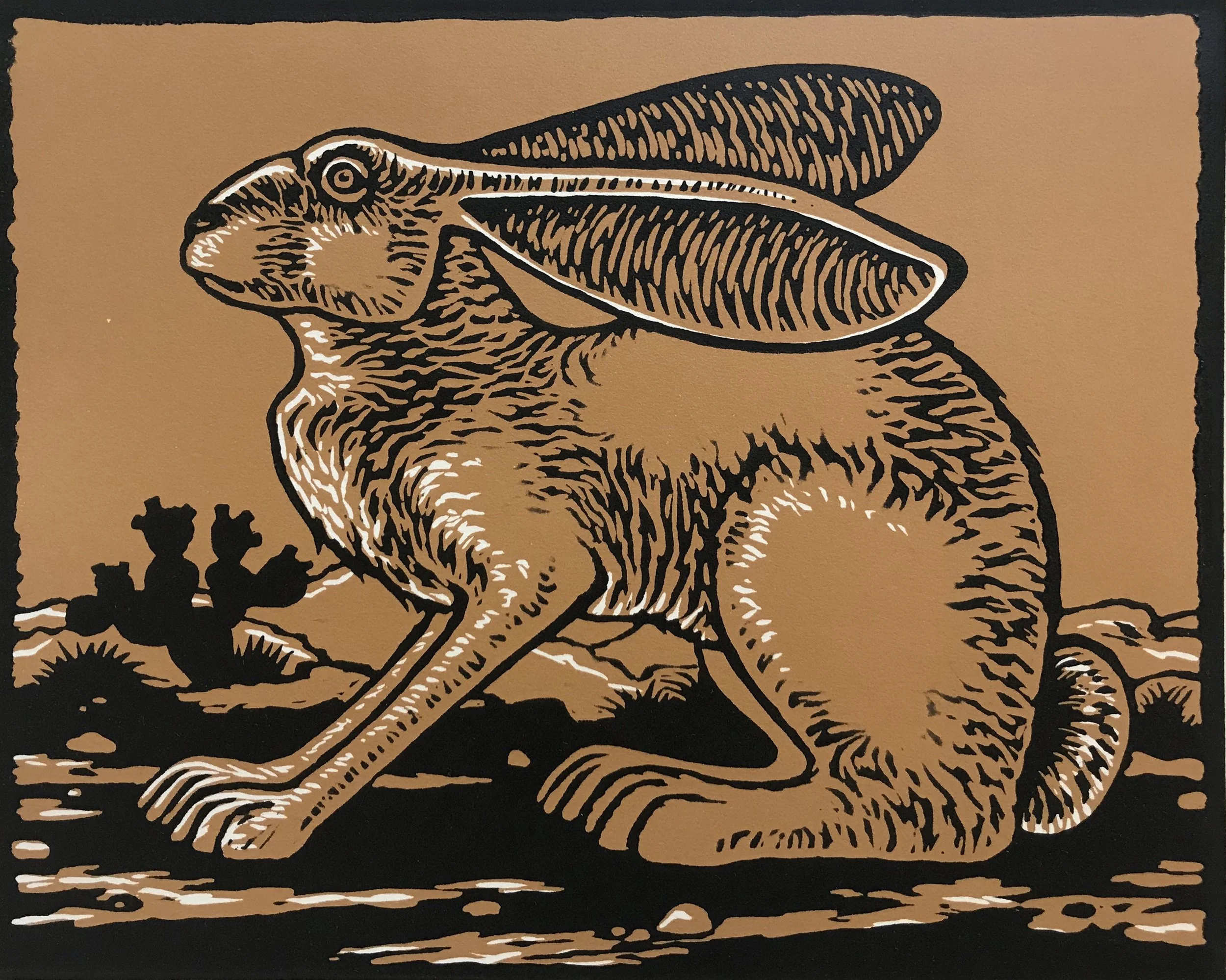
David Everett, Respite, woodcut, edition of 20, 2020
I don’t think anyone uses that line anymore, but it was a hot phrase back in the 1900s—and the idea behind it goes back much further than that!
Almost as soon as paper became widely available, artists found ways to transfer images from inked carved or engraved surfaces onto paper. They could reapply ink to the surface, print another image, and then another and another. Suddenly, an image made by an artist did not have to exist only once.
Those printed images found their way into the hands of a growing class of art collectors. Albrecht Dürer, well known for paintings commissioned by churches and the nobility, also created extraordinary woodcuts and engravings. They could be purchased for a fraction of what a painting might cost, and they allowed his work to circulate far beyond the walls of a church, palace, or wealthy patron’s home. Prints became an important part of both his artistic reputation and his livelihood.
By the 1700s and 1800s, artists throughout the world were using an astonishing variety of printmaking methods. Japanese woodblock prints were making their way into Europe and profoundly influencing European artists. Piranesi, Callot, and Canaletto were among the artists whose prints carried images of architecture, landscapes, cities, everyday life, fantasy, and human drama into collectors’ hands.
Later, Degas experimented extensively with etching and monotype, pushing those processes in wonderfully inventive directions. Mary Cassatt used printmaking to capture intimate moments—a woman writing a letter, bathing a child, crossing a street. Prints gave collectors another way to follow the work of an artist they admired.
They also gave collectors a way to specialize.
A collector might focus entirely on images of women, exotic animals, battle scenes, landscapes, birds, or cities. Without ever traveling abroad, an English collector could assemble images of Egypt, Rome, Persia, or Japan. A collector in Boston might keep a drawer filled with etchings and lithographs of Paris. A collector in Mexico might assemble a stirring group of woodcuts expressing resistance, revolution, and political dissent.
And so, “Would you like to come up and see my etchings?” could actually have been a legitimate—and exciting—way to spend an afternoon. :)
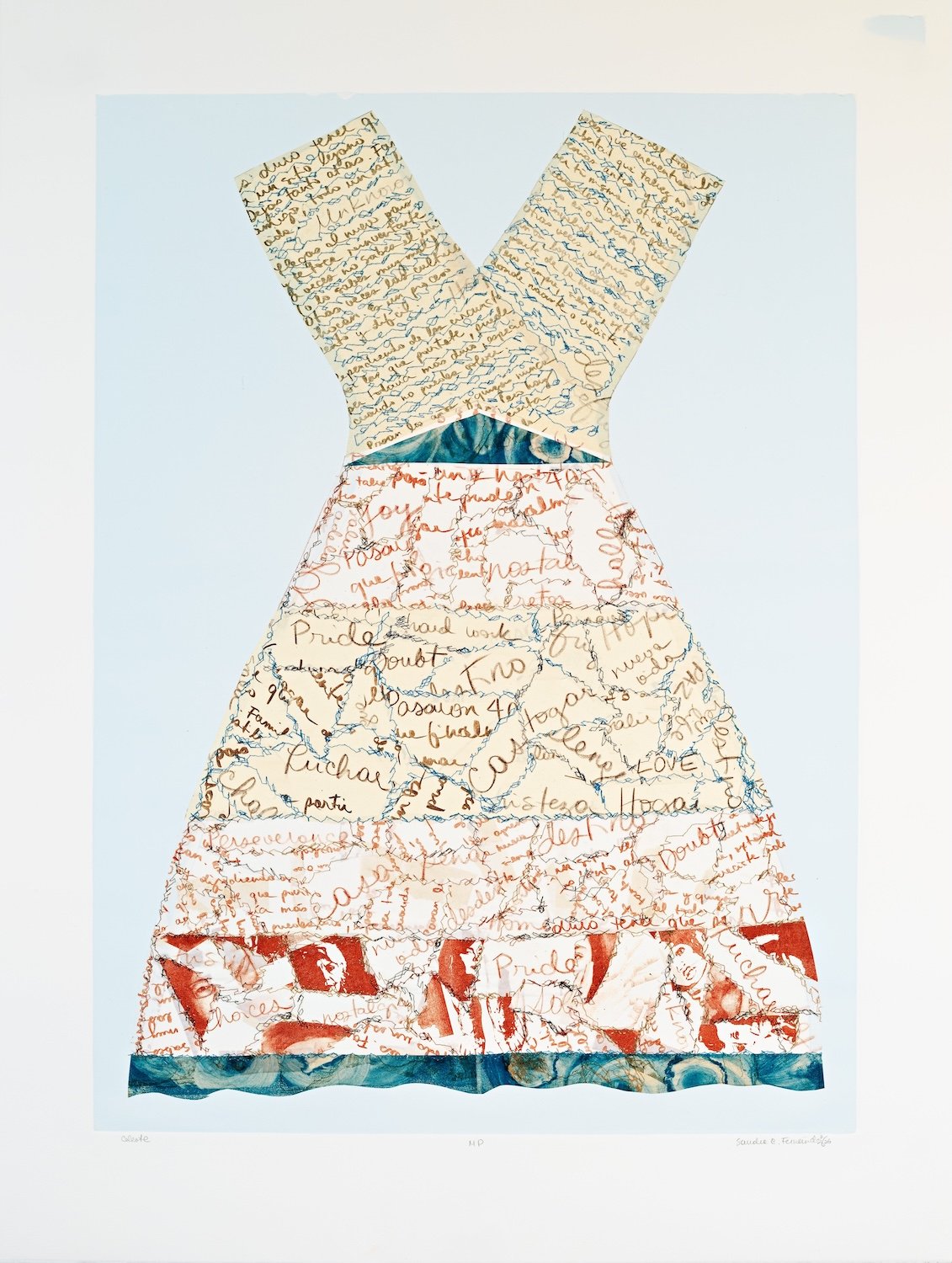
Sandra Fernandez, Celeste, Lithography, monoprint, chine collé and stitching, 2026.
It continues today.
Collectors often begin to hone their collections around something that fascinates them. They may seek work by artists from a particular region or cultural background. They may become devoted to the work of one artist and try to acquire examples from throughout that artist’s printmaking career. Or the thread connecting the collection may simply be a subject they love.
Recently, a collector came to Flatbed looking for a print of a rabbit.
Rabbits have fascinated artists for centuries—Dürer’s famous Young Hare immediately comes to mind, even though it is a watercolor rather than a print. We were able to steer our collector toward David Everett’s Respite, 2021.
And why not build a collection around rabbits? Or birds? Dogs? Portraits? Trees?
The wonderful thing is that the subject may remain the same, but every artist sees it differently. Put ten prints of birds together and you don't simply have ten pictures of birds. You have ten different ways of looking at the world.
But subject matter can also be just the beginning.
First, we are drawn to a work. Then curiosity takes over. Who is the artist? Why did they make this image? What does it mean to them? How was it made? The more we learn about a work, the deeper we can enter into it.
Recently at Flatbed we worked with Sandra C. Fernandez on a series centered on dresses. Created through a combination of lithography and hand-sewn construction, each dress carries suggestions of migration, memory, identity, and an immigrant’s story. At first you may simply see a dress. Then you learn more, and the dress becomes something else entirely.
The woodcuts of James Surls can be deeply personal while at the same time touching something universal about living and loving. Kyle Hawley’s monoprints can initially seem playful, but look longer and learn more about them and an undercurrent emerges—the complicated, serious, funny, exhausting nature of motherhood.
That may be one of the great pleasures of collecting prints. You can begin almost anywhere.
You can begin with rabbits.
But you probably won’t end there.
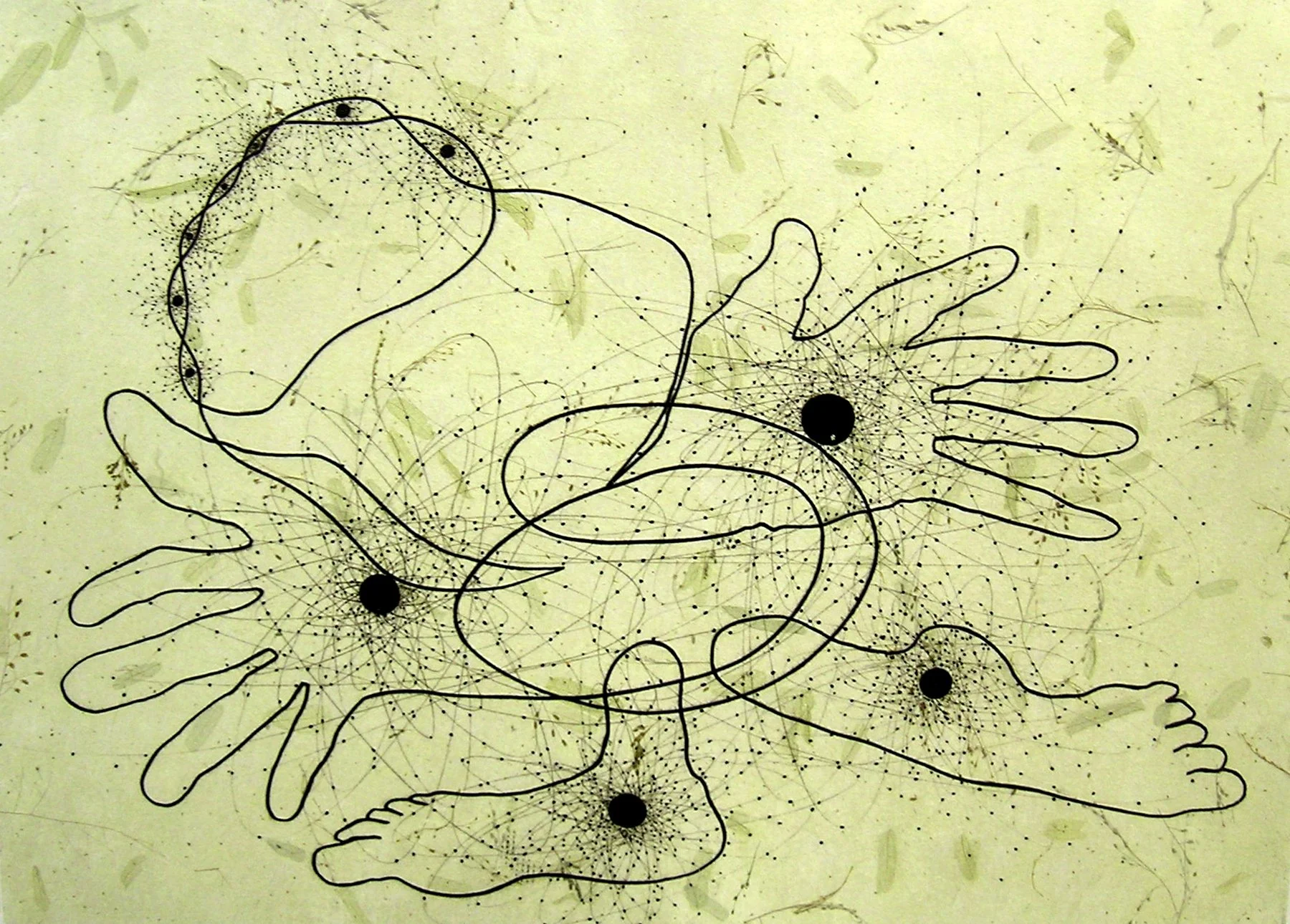
James Surls, Body Knowing, chine collé etching, edition of 21, 2006.