The Art of Collecting
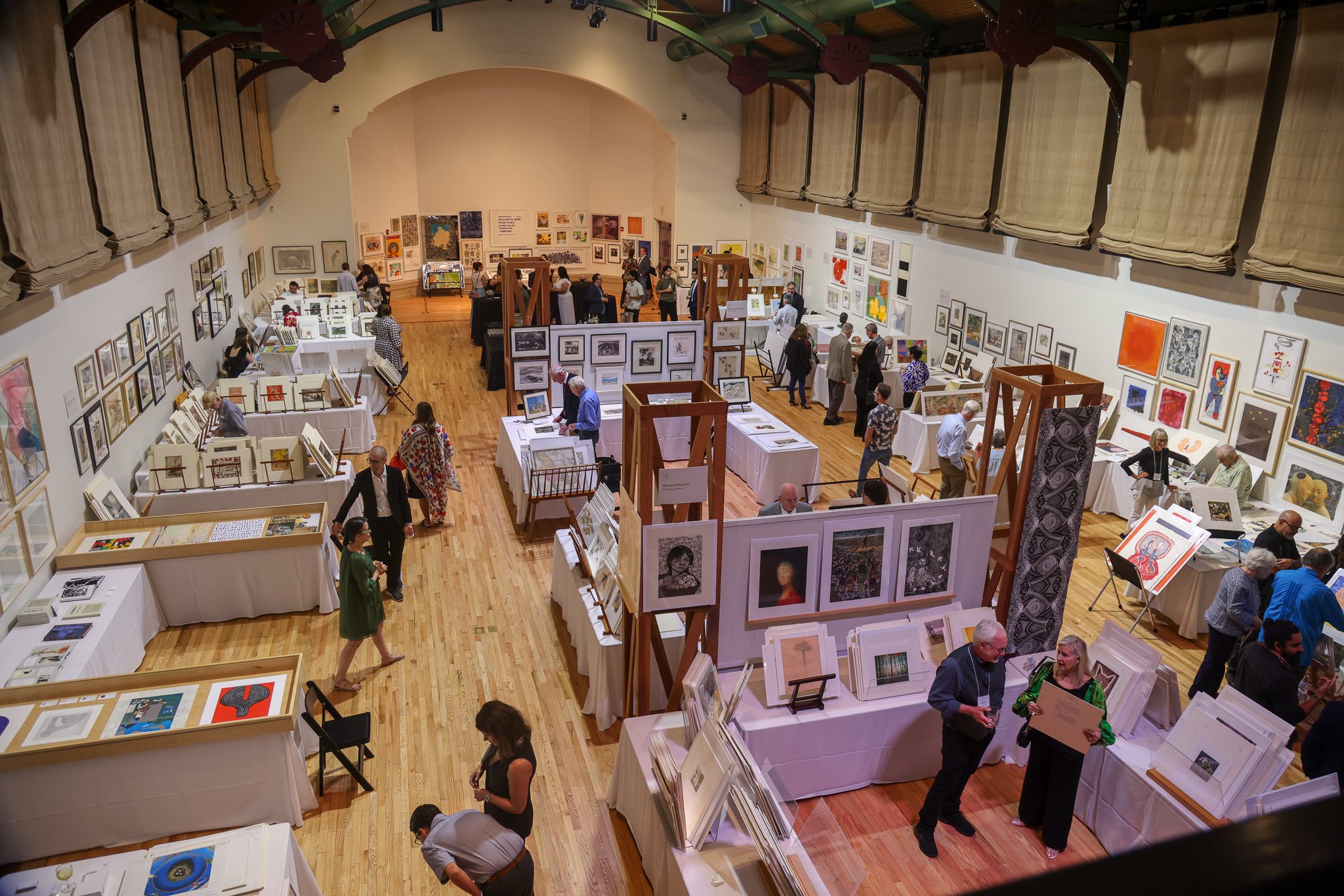
McNay Print Fair, March 2026.

Some of us start young. We start with rocks. They catch our eye while hiking, and soon we have a row of pocket-sized bits of ancient history in different colors and shapes. We learn their geological names. We go on to find out how they came to be. Each one might bring back the memory of a time and place when we reached down, picked it up, and put it in our pocket.
Then there are cards, books, autographs, stamps, and all sorts of other objects. We find meaning and satisfaction in gathering things, learning about them, and building collections.
When we start to collect art, something changes. We set out on an uncharted journey.
We find ourselves drawn to a work. We learn about the artist; we dive into how the work was created and why. And we discover that living with art gives us time to pause and revisit the conceptual and emotional space within it. That first work might lead us to another by the same artist, or to other works that somehow resonate with the first.
A collector I know is drawn to drawings and prints by artists that are devoid of color. The works were chosen because they seem stripped bare to the essential elements of the image. The marks feel fresh and close to the hand of the artist. Over time, what began as an attraction to individual works has become a collection with its own character.
Other collectors focus on subject matter: birds, fish, landscapes from around the world, bridges, portraits. Others may be drawn to a particular medium, generation of artists, geographic region, or simply to work that speaks to them. The possibilities are immense. The collector charts the journey, and gradually the individual choices become a purposeful and meaningful whole.
Collectors play an integral part in the art world. Artists create work to share, and collectors support an artist's voice through the act of buying—and “listening.” The work becomes present in the collector's life and space, where it can continue to offer meaning not only to the person who chose it, but to family, friends, and others with whom it is shared.
Collecting original art doesn't require great wealth, nor does it require knowing everything about art before you begin. It requires looking. It requires paying attention to what holds you for a little longer than everything else in the room. Sometimes the beginning of a collection is simply that moment when you realize you don't want to stop looking at something.
Prints can be a particularly wonderful way to begin. Original prints—etchings, lithographs, woodcuts, screenprints and other printmaking processes—allow collectors to acquire original works by important artists, often at prices considerably lower than paintings or unique works. And because of the collaborative nature of printmaking, they carry with them another story: the artist's encounter with the press, the matrix, the paper, and often the printer.
At Flatbed, we have more than three decades of those stories tucked away in our flat files.
That is one reason we are beginning Flat File Saturdays—an opportunity to open the drawers, pull out work that hasn't necessarily been on our walls recently, and spend some time looking. We'll feature different artists and groups of work, talk about how the prints were made, and share some of the stories behind them. Look for Flat File Saturdays every second Satruday of the month. Coming soon we will share the Darden Smith Collection on September 12th.
You don't have to arrive knowing what you want to collect.
Come look. That's where collecting begins.